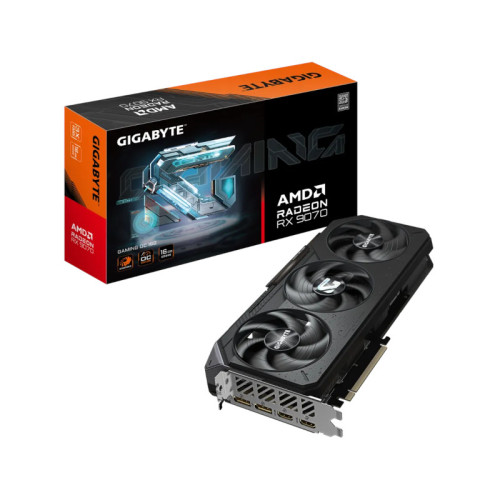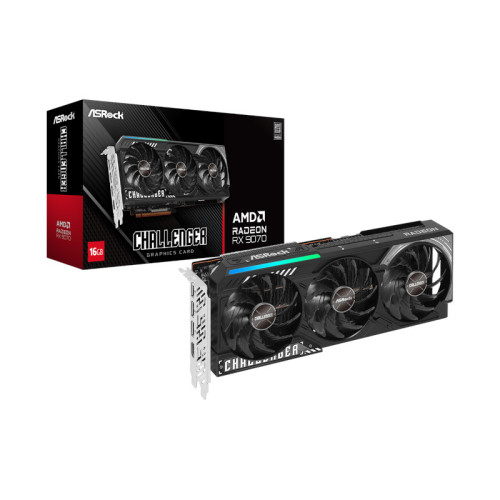
RX 9070 ASRock 7.8
ASRock AMD Radeon RX 9070 Challenger 16GB GDDR6
- GDDR6
- 16 GB
- Length
- 290 mm
₹77,450
12 hours ago
Every card on GPUTracker gets a GPUTracker Score out of 10. It answers one question: how good a buy is this card, today, at this price? It is recalculated every time a price changes, and stores and brands cannot pay to change it.
How fast the GPU is, as a relative index where an RTX 4090 is 100. We use a sourced benchmark figure when one is recorded for the GPU, otherwise our own estimate from published game benchmark averages. The index is placed on a log scale, so moving from a GT 730 to an RTX 3050 counts as much as moving from an RTX 4070 to an RTX 4090 – both feel like a big jump.
Performance for every ₹1,000 at today’s lowest price, compared with the median gaming card on GPUTracker. A card that gives twice the typical performance per rupee scores about 7, half scores about 3. Office and workstation cards are left out of the median so they do not drag it down.
Today’s price against this card’s own 90-day average: 10% below average scores 10, 10% above scores 0. A card at its lowest price in a year scores at least 9. Until we have enough price history it stays at a neutral 5.
Video memory counts for 60% (16 GB or more scores 10, 8 GB scores 6, 4 GB scores 3). The other 40% is the generation’s feature set – upscaling, frame generation, ray tracing and AV1 encoding – from RTX 50 and Radeon RX 9000 at the top to decade-old GPUs at the bottom.
Performance per watt of board power, using the card’s own figure when listed. An RTX 4060-class card scores about 10. Efficient cards run cooler and quieter, need a smaller power supply and cost less to run.
Warranty (3 years or more earns most of the points), cooling (two or three fans), a factory overclock and how complete the card’s verified specifications are. It is the only part that separates two cards on the same GPU.
| 8.5 – 10 | Excellent |
|---|---|
| 7.5 – 8.4 | Great |
| 6.5 – 7.4 | Good |
| 5.0 – 6.4 | Fair |
| 0 – 4.9 | Basic |
Basic display cards such as the GT 610, GT 710 and GT 730 score low because they are rated as graphics cards for games and everyday use. They are still the right buy when you only need extra monitor outputs.
RX 9070 ASRock 7.8
₹77,450
RX 9070 XT ASRock 7.7
₹96,500
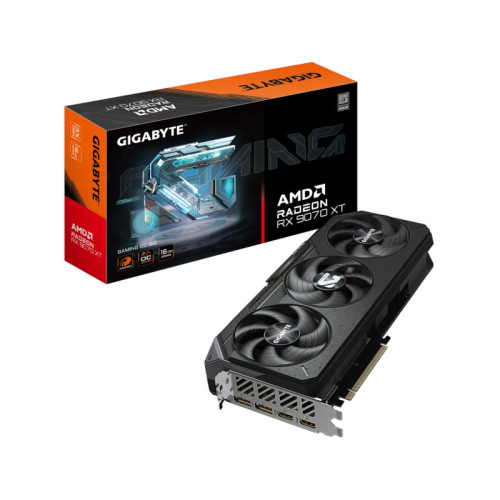
RX 9070 XT GIGABYTE 7.6
₹99,500
RTX 5060 Ti INNO3D 7.5
₹45,999
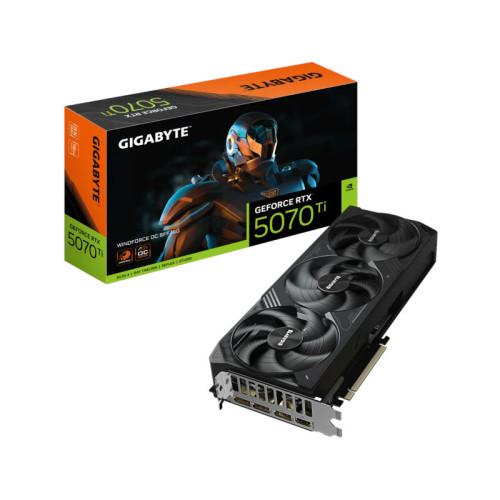
RTX 5070 Ti GIGABYTE 7.3
₹1,50,589
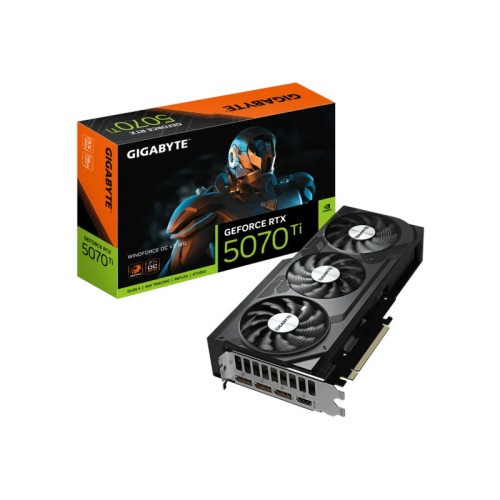
RTX 5070 Ti GIGABYTE 7.3
₹1,51,000